

Climate Reality is Redefining the Façade Design Assumptions
Extreme wind and rainfall events across ASEAN are no longer outliers, they are redefining façade design envelope. Recent events such as Cyclone Senyar (2025) in the Strait of Malacca and record rainfall events in Singapore (2024) highlight a critical shift; façade systems are increasingly exposed to combined load cases beyond historical assumptions.
For curtain wall systems, this shift places greater emphasis on correctly identifying design load demands and ensuring that structural glazing sealants are properly dimensioned to resist them. Under extreme conditions, the glazing interface becomes a primary structural element, governing how wind pressure, suction, glass self‑weight, and building movements are carried into the supporting frame.
As climate patterns evolve, the long‑term reliability of Structural Silicone Glazing (SSG) becomes a fundamental determinant of façade safety, serviceability, and resilience.
The Structural Function of SSG in Curtain Wall Systems
In a properly engineered curtain wall system, SSG performs multiple safety critical functions.

Load Transfer
Transfer wind
and dead loads from glass to
supporting fame

Movement Accommodation
Absorb thermal expansion and contraction,
building sway and seismic effects
Adhesion Integrity
Maintains durable
bonding between dissimilar
substrates

Environmental Resistance
Withstand UV,
humidity, heat
and heavy rainfall

System Redundancy
Reduces risks of
sudden or progressive f
ailure
When any one of these functions are compromised, the facade load path is affected, increasing vulnerability during extreme events.
Engineering Parameters that Govern SSG Performance
SG performance is governed by the alignment between design demand and joint capacity. Typical design considerations include:
- Structural bite (properly dimensioned depending on wind load, glass size, safety factors and governing standards)
- Allowable design stress (typically, 0.14 to 0.21 MPa per global / regional standards guidance)
- Sealant thickness to accommodate movement without overstress.
- These parameters must be validated against project specific loading and movement, rather than legacy details or standardized assumptions.
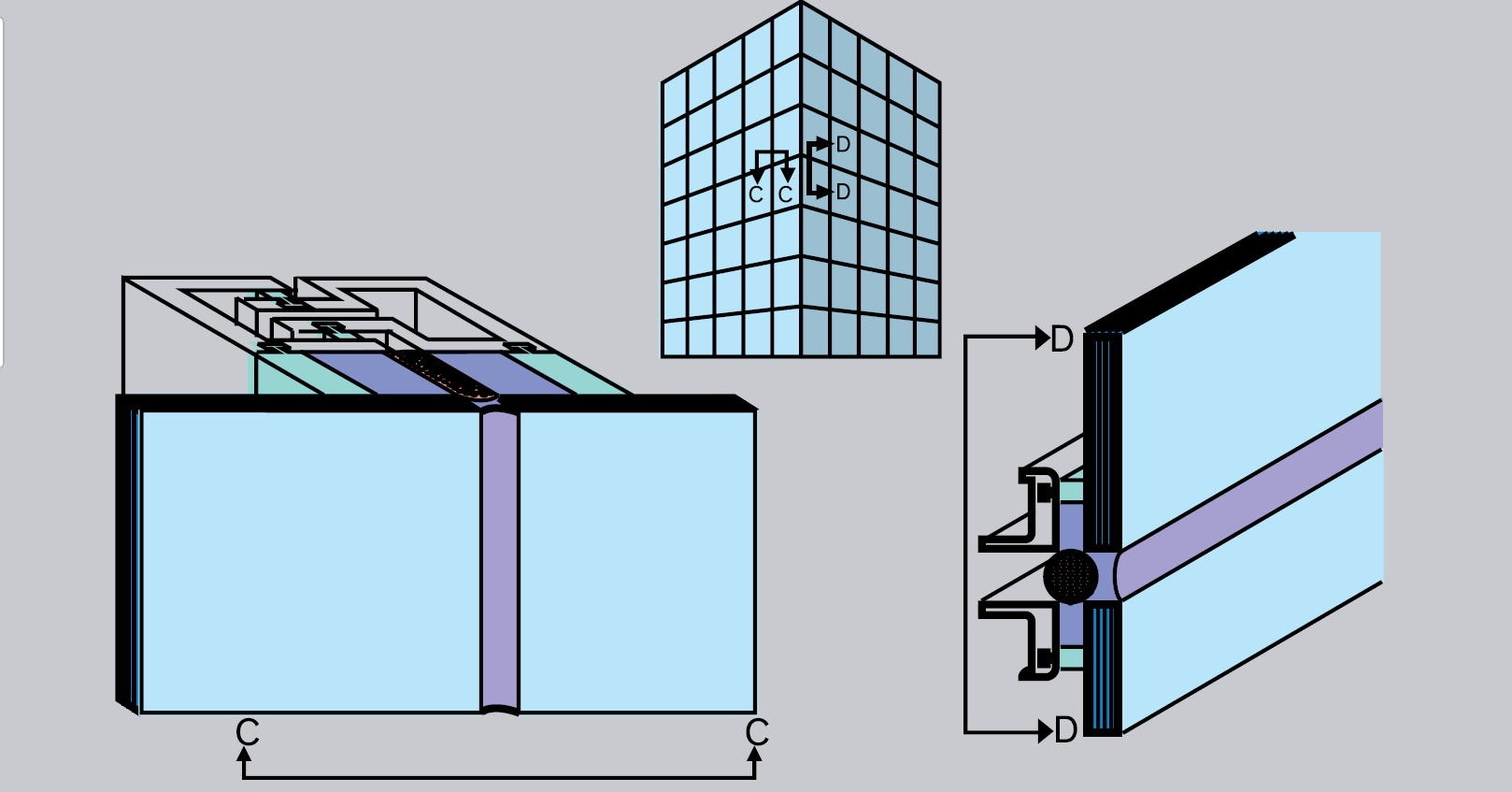
Four-sided structural silicone glazing
Why SSG System Succeed or Fail
Field investigations show that SSG underperformance is rarely due to inherent material failure. Instead, failures typically manifest through:
- Adhesive failure: loss of bond due to poor preparation or substrate incompatibility
- Cohesive failure: internal sealant rupture when actual stress exceed allowable limits
- Fatigue driven debonding: progressive degradation under cyclic movement and environmental exposure
These failure modes are commonly linked to:
- Use of non-certified or incorrectly specified materials
- Inadequate structural bite or joint geometry misaligned with real load paths
- Lack of verified substrates compatibility
- Poor surface preparation or inconsistent application
Extreme weather does not create failure; it reveals weaknesses already embedded in the design or execution.
Engineering considerations for Robust SSG Design
Reliable SSG performance depends on aligning material capability with engineering inputs:
- Structural sealant dimension sized to resist peak wind load with appropriate safety margin
- Verification of allowable design stress under long-term and short-term loading
- Adequate movement capability for thermal, structural and seismic effects
- Confirmed compatibility with all substrates.
In structural glazing, performance is largely predetermined at design stage not during installation.
50 Years of proof under the world’s most demanding conditions
Dow has supported SSG for over 50 years. DOWSIL™ Structural sealants are specified on some of the worlds’ most complex and demanding high-rise façade, including Shanghai Tower, Petronas Towers (Kulua Lumpur) , and Burj Khalifa (Dubai). Each project is subject to extreme wind loads, thermal cycling, and high-humidity environments.
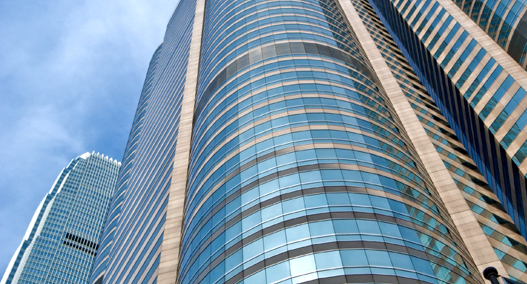
Exchange Square (Hong Kong)
Longer term evidence is equally compelling. Exchange Square in Hong Kong completed in the 1980s, had undergone more than 40 years of typhoon season exposure. Its SSG systems continue to performance, demonstrating a principle that guides all of Dow’s façade engineering work.
Façade resilience is not defined by resistance to a single extreme event, but by durable load transfer and adhesion reliability over thousands of cycle.
Dow’s Engineering Framework
Dow’s approach combines engineering, testing and construction support across the entire project lifecycle:
- Field-proven performance data from extreme environments
- Advanced engineering and rigorous testing for optimal joint design. Learn more
- Compliance with global standards (ASTM C1184, ETAG 002, GB 16776)
- Construction Support Services, covering design review, adhesion and compatibility testing and quality verification during fabrication and installation. Learn more
- Quality Bond™ program ensuring trained applicators and controlled execution.
- Structured warranties up to 20 years when Dow guidelines are followed
This framework is designed to address not just initial performance, but decades‑long durability under real‑world exposure.
Let’s Continue the Technical Conversation
Early engagement on SSG design enables better decisions before façade geometry and joint details are fixed.
®™ Trademark of The Dow Chemical Company ("Dow") or an affiliated company of Dow
Copyright © The Dow Chemical Company (1995-2026). All Rights Reserved.